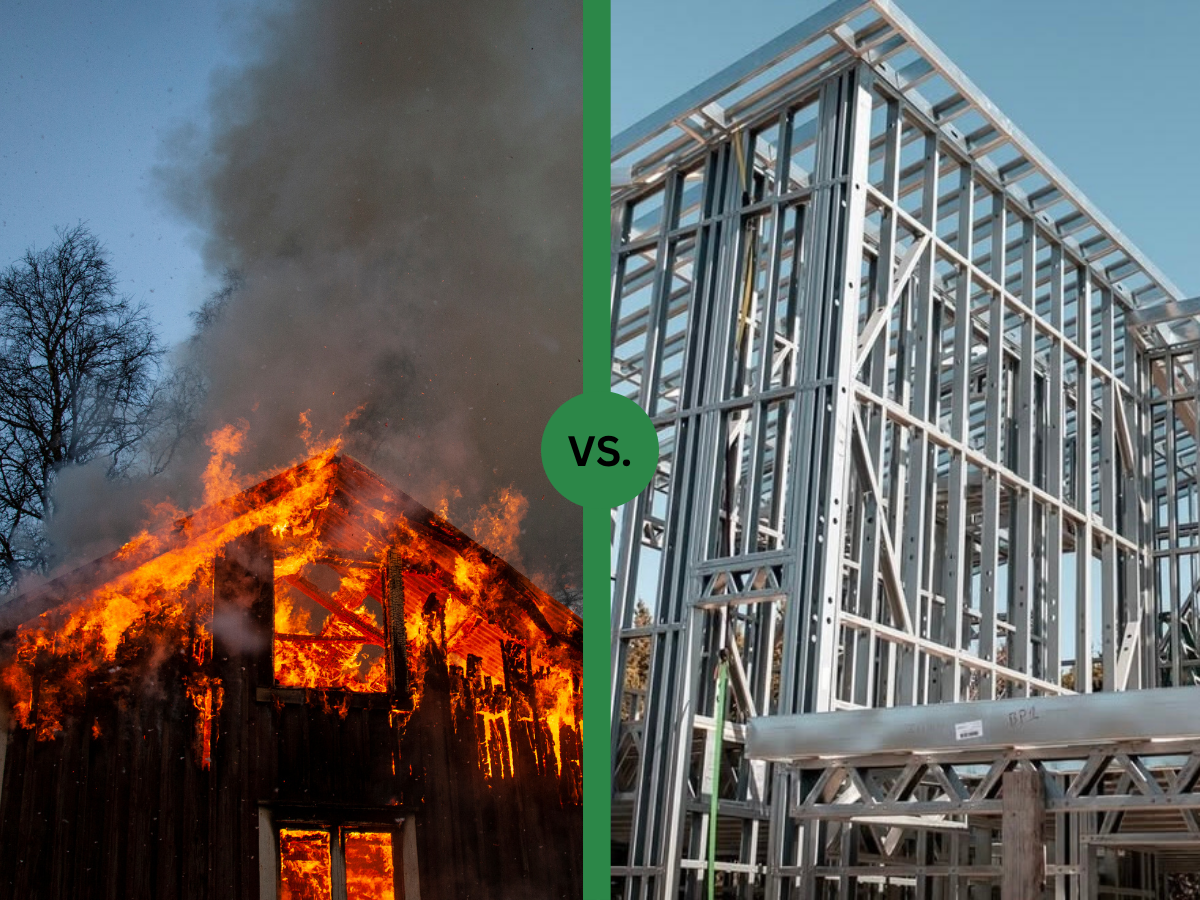
Insurance premiums are increasingly influencing construction material choices—and the data clearly favors cold-formed steel (CFS). According to a recent piece on BuildSteel.org, developers are seeing 30% to 50%+ reductions in builder’s-risk and property insurance when they use steel instead of wood.
Here’s what’s driving the trend:
-
Non-combustibility matters. Underwriters view CFS as noncombustible, which drastically lowers fire risk.
-
Real-world premium differences. Wood structures in non-catastrophe zones often come in around $0.30–$0.40 per $100 of value, while similar steel-framed projects are closer to $0.15–$0.20.
-
High-risk zones amplify savings. In areas prone to wildfires, tornadoes, or hurricanes (so-called CAT zones), the premium gap widens even more.
-
Long-term value. These savings aren’t just during construction—they extend into the building’s life. Lower risk persists, meaning permanent property insurance is cheaper too.
-
ROI argument: Some developers are now factoring insurance cost into their design decisions. One executive said it’s no longer just a code or engineering decision—it’s an ROI play.
-
Real-world example: A Midwest hotel developer was so shocked by how low his quote came back that he asked his broker, “This can’t be right.” But it was—and switching to steel saved them significantly.
Bottom line: With underwriters evaluating risk more aggressively than ever, insurance is becoming a design variable, not just a footnote. For builders, owners, and developers looking to make smarter long-term financial decisions, CFS framing offers a compelling and quantifiable advantage.